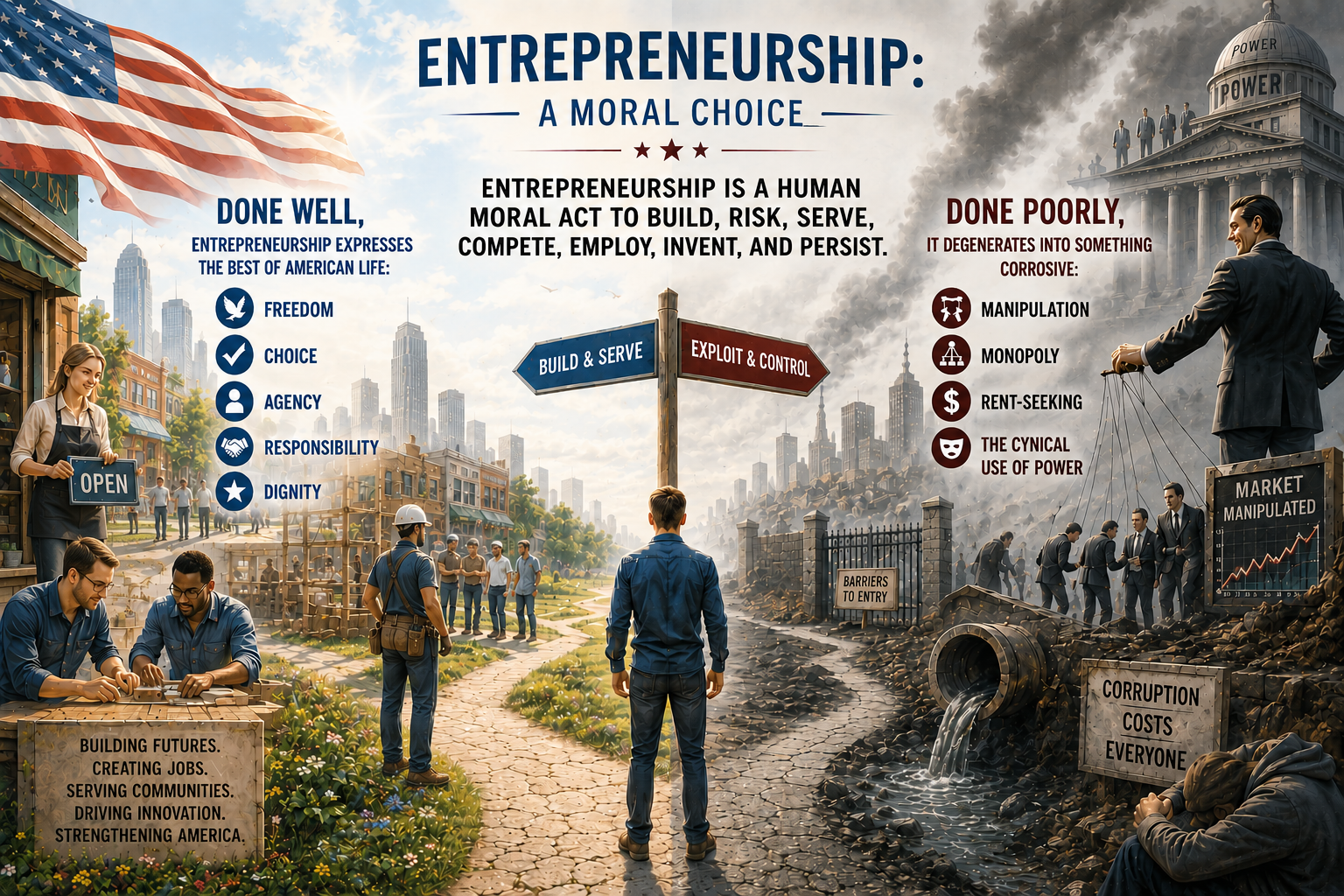
Entrepreneurship is, inescapably, a human moral act to build, risk, serve, compete, employ, invent and persist. Done well, entrepreneurship expresses the best of American life: freedom, choice, agency, responsibility and dignity. Done poorly, it degenerates into something corrosive: manipulation, monopoly, rent-seeking and the cynical use of power.
For thoughtful readers, this distinction should matter because economic markets do not run on money alone. They run on trust. Trust is not created by legislation or messaging. Trust is earned by institutions and citizens who understand what the founders understood: liberty survives when tethered to virtue, and rights endure only when joined to responsibilities. From my experience, public confidence in major institutions, most especially universities, rises or falls on understanding the link between freedom and moral restraint, between rights and duties.
The founders were realists who understood human nature is the starting point of a great nation. The American founding is remarkable partly because it is unsentimental about human nature. James Madison writes in Federalist No. 55: “There is a degree of depravity in mankind which requires a certain degree of circumspection and distrust; so there are other qualities in human nature which justify a certain portion of esteem and confidence.”
The tension of distrust and hope in human nature is the heart and lungs of democratic capitalism, breathing life into ideas. Entrepreneurship channels ambition into productive service, but only when the culture and the law provide guardrails. Innovation needs space. It also needs a fence line. Without civic expectation enforcing moral restraint, entrepreneurial energy becomes predatory. Public policy and worthwhile ideas should not romanticize business or government. Both are operated by human beings where incentives matter, but so do morals, conscience and the habits of engaged citizenship.
Freedom and responsibility are the engine and transmission of prosperity. The Declaration of Independence, written in 1776, establishes a philosophical foundation: human beings are endowed with rights, and government exists to secure those rights. But the American experiment never intended “rights talk” to become a substitute for moral duty.
I repeatedly share the warning that when freedom is uncoupled from responsibility, anarchy reigns and tyranny triumphs. That isn’t empty rhetoric; it’s history. Disorder invites control. A society that cannot govern itself morally will eventually be governed by force. Thomas Jefferson, in the Works of Thomas Jefferson, cautioned with the clarity of a statesman who knew the fragility of freedom: “Can the liberties of a nation be sure when we removed their only firm basis, a conviction in the minds of the people, that these liberties are a gift of God?” Whether one reads Jefferson’s point in theological or philosophical terms, the civic meaning is the same: liberty depends on a shared conviction that something higher than appetite governs human conduct. When liberty becomes disposable, the entrepreneurial ecosystem becomes very brittle.
America’s blueprint is decisively simple: decentralize power, resist capture and trust citizens. The founding wasn’t only a revolution; it was a revolutionary exercise in institutional design, dispersing power to resist faction, monopoly and capture. That same revolutionary spirit shows up in the structure of the Constitution itself and in Madison’s warning about faction in Federalist No. 10, describing the need for federalism’s separation of powers, which provides checks and balances.
That architecture is entrepreneurial in its bones: put initiative near the work (local knowledge matters); expect competence and reward performance; limit domination, whether political or corporate; prevent capture of public institutions by narrow interests. Committees don’t create courage, nor do rules create character. People do. Policies can restrain the worst impulses, but they cannot manufacture virtue. Policy can, however, either nourish or poison the conditions in which virtue grows.
The economy needs virtue because trust lowers transaction costs; honesty reduces the need for surveillance and litigation; moderation keeps ambition from becoming arson. Individualism is necessary in a free society. But individualism without responsibility to the community is a road to disorder.
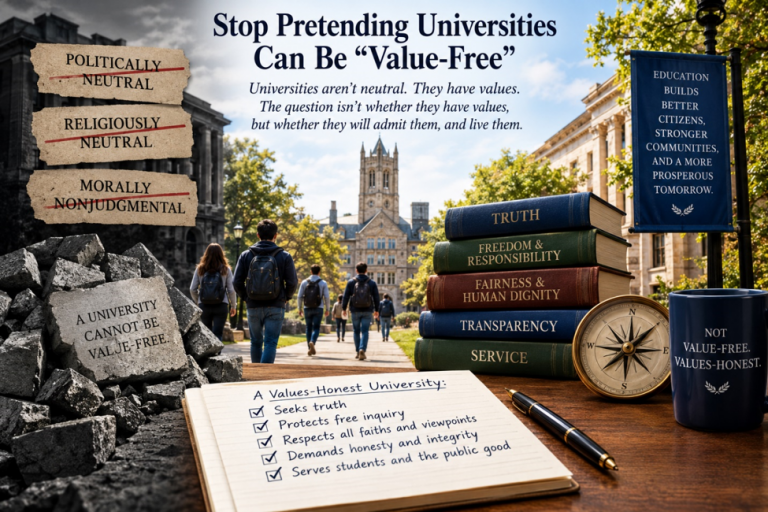
Innovation can widen opportunity or narrow thought. Innovation without virtue becomes a contrivance. Universities that have courage defend open inquiry by resisting undue external influence and resisting the internal tendency toward sameness of thought. Leaders of every kind who appreciate America’s 250 years of lessons should understand that a society that cannot debate honestly cannot innovate freely. When a university becomes an engine of ideology, of any stripe, it becomes a pressure cooker of compromised thinking, unable to produce entrepreneurs and instead producing compliant technicians. Educated and trained hands without formed judgment are lacking from the perspective of engaged citizenship.
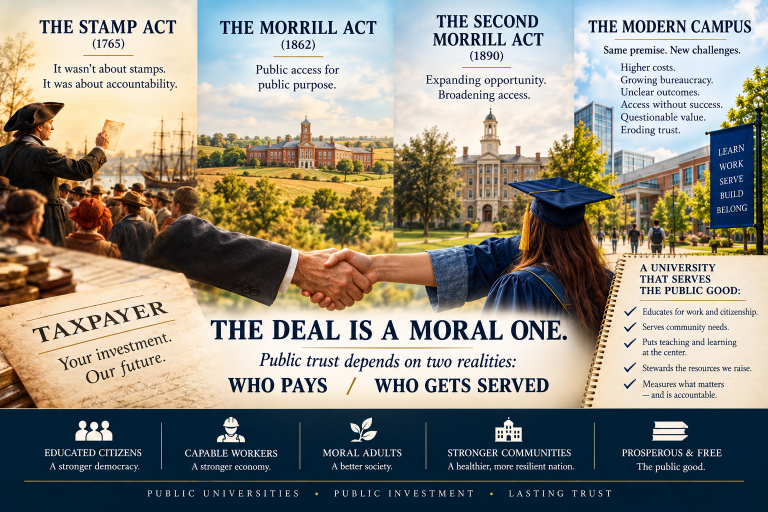
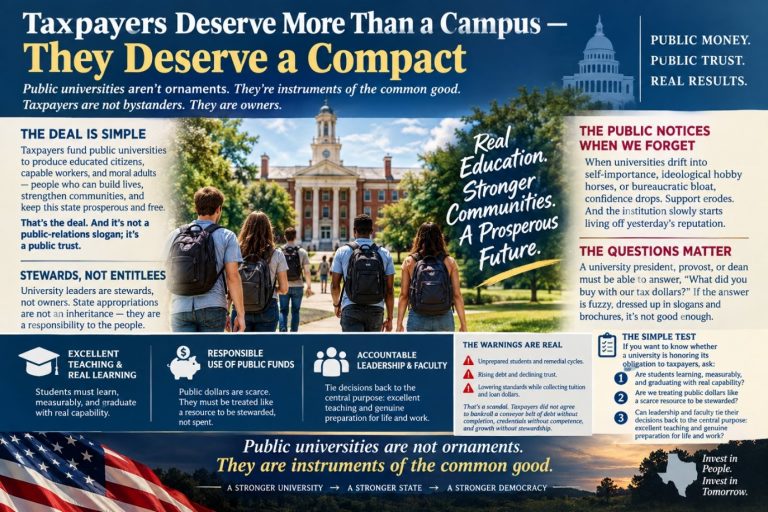
The imperative for good universities? Be builders of the constitutional republic. Entrepreneurship ecosystems are not manufactured by slogans, ribbon cuttings, or new centers. It is built by people with competence and conscience, citizens who can think, communicate, take wise risks, tell the truth and accept accountability. Therefore, higher education’s public purpose is not merely workforce preparation; it includes forming citizens who understand ordered liberty and freedom bounded by responsibility.
America can innovate. The question is whether we will innovate in a way worthy of a constitutional republic, grounded in human dignity, accountability and public trust. Our goal at WT is to attend to innovation the right way. This is the foundation of WT 125: From the Panhandle to the World.
Walter V. Wendler is the President of West Texas A&M University. His weekly columns are available at https://walterwendler.com/.