My erstwhile associate, compatriot and thoughtful friend, Bob Harvey, reminded me about the power of Henry P. Tappan’s 1858 declaration, which still rings with bracing clarity.
Governments cannot make universities by enactments of laws: Nor corporations by erections of edifices: The church cannot create them under the authority of heaven: The flattering eulogies of orators cannot adorn them with learning: Newspapers cannot puff them into being. Learned men-scholars- these are the only workmen who can build up universities. Provide charters and endowments- the necessary protection and capital – provide books and apparatus- the necessary tools: Then seek out sufficient scholars, and leave them to their work, as the intellectual engineers who alone are competent to do it.
–Henry P. Tappan (1805-1881), President, University of Michigan, 1858, lecture, Christian Library Association, 22 June, quoted in Richard Hofstadter and William Smith (eds.) American Higher Education: A Documentary History Volume II 1961, p. 519
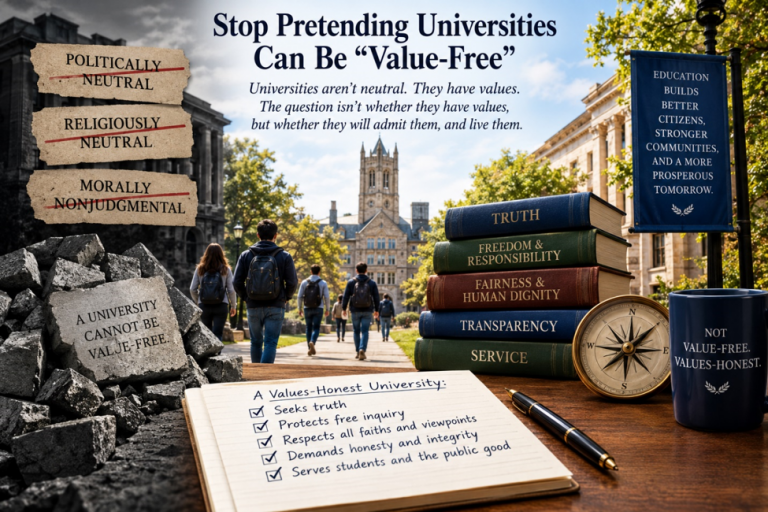
Tappan was right. But in the 21st century, his claims deserve renewed affirmation and refinement. Universities today occupy the intersection of politics, markets, debt, media, faith and scholarship. Governments, learned people and schools have power and influence, but none have authority over the university’s soul. His assertions demand attention, one by one.
Institutional leadership, boards, presidents and faculty dedicated to responsible excellence can achieve the same greatness that universities have held for nearly 170 years. But “governments cannot make universities by enactments of laws.” Legislatures can charter institutions, allocate funds and set guidelines to support and protect the educational mission, but laws do not create learning. Statutes cannot inspire curiosity. Regulations cannot produce insight. Nonetheless, governments and academic leaders bear a significant responsibility to foster conditions where free inquiry can thrive. When lawmakers remove barriers between teachers and students, they strengthen universities. When legislators politicize institutions or treat them as mere state agencies, obstacles arise that hinder their mission. A university exists to serve the public, but it can become merely a bureaucratic arm of the state. Educational authority lies not in statutes but in intellectual competence, the currency of knowledge.
“Nor corporations by erections of edifices.” Buildings are necessary but insufficient. Marble columns and glass atriums do not generate ideas. I have seen campuses with breathtaking architecture and lifeless classrooms. Corporations often understand something universities forget: product matters. But here is the distinction: students are not products and universities are not factories. When universities pursue prestige projects while neglecting intellectual vitality, they invert priorities. Edifices should serve inquiry, not substitute for it. Ideas create institutional theology, not infrastructure.
“The church cannot create them under the authority of heaven.” Historically, universities grew from religious soil. Harvard, Princeton and Yale emerged from a theological conviction that the universe is ordered, and should be known. Faith can inspire the search for truth, but doctrine cannot replace discovery. Whenever any orthodoxy, religious or secular, crushes free inquiry, the university falters. A university must remain a place where truth stands apart from fashion and power, including ecclesiastical power. Faith animates inquiry, but faith must not predetermine conclusions.
“The flattering eulogies of orators cannot adorn them with learning.” No speech, however eloquent, can compensate for mediocrity. Universities today are tempted by branding campaigns, strategic vision statements, and promotional gloss. Image is not always substance. Reputation cannot be persuaded into existence; character is earned through thousands of acts of diligence over time. When leaders substitute rhetoric for rigor, students notice, families notice and the public notices. As Benjamin Franklin and countless others have warned, it takes many good deeds to build a reputation and one to lose it. Oratory may inspire, but only scholarship sustains.
“Newspapers cannot puff them into being.” Media attention, positive or negative, does not define institutional quality. Universities obsessed with public relations often neglect the slower, quieter work of cultivating excellence. You cannot “puff” a university into greatness any more than you can advertise your way into moral authority. Eventually, reality asserts itself. Students vote with their feet. Faculty vote with their careers. Donors vote with their gifts. The public is not foolish. They can smell a rat.
“Learned men, scholars, these are the only workmen who can build up universities.” Here, Tappan speaks eternal truth. Faculty are not merely employees of the university; they are the university. The synapse that sparks between teacher and student is where transformation occurs. Not in the boardroom. Not in the legislature. Not in a press release. Excellent faculty are often demanding, occasionally prickly and sometimes inconvenient. Good universities tolerate faculty. Great universities seek them out. Excellence is not willed into existence; it is worked into being. Scholarships, whether in physics, poetry, history or engineering, create an intellectual climate that defines institutional character. Institutional character advances civilization; without it, trade and schooling follow. This does not diminish trade schools but recognizes distinctives needed to attain focused excellence in different mission commitments.
“Provide charters and endowments… provide books and apparatus… then leave them to their work.” Tappan’s final charge is perhaps the most difficult for our age. Yes, scholars require protection. Academic freedom is essential. Tenure, properly understood, is the protection of the courage of dissent grounded in disciplined inquiry. Unfortunately, the need and justification for tenure are too rare because powerful ideas that grab attention by challenging the disciplinary status quo are scarce. Ideas are divisive, on campus and off. Resources and support enable ideas to flourish. Cash flow is the result of ideas, not their cause. Should the state supply sustenance and simply “leave them to their work?” It does not work. Freedom without responsibility erodes public trust. Scholars must be free within their field of study, but faculty are accountable to truth, rigor and the public good. The marriage of freedom and responsibility is the foundation of a healthy university.
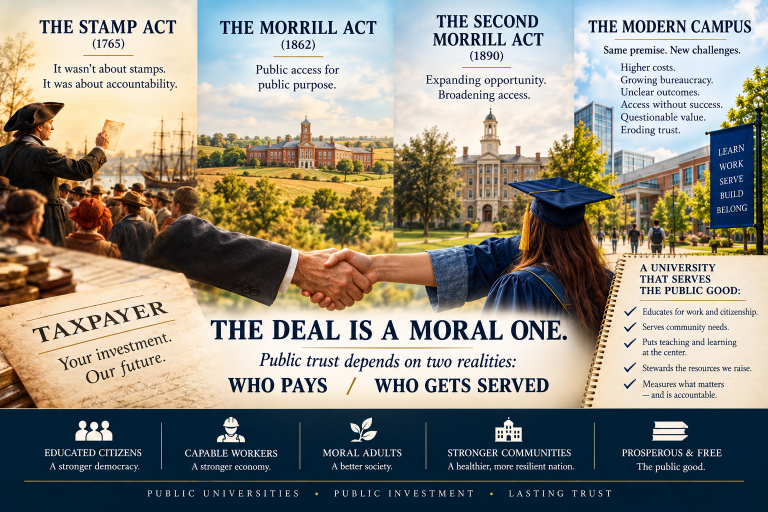
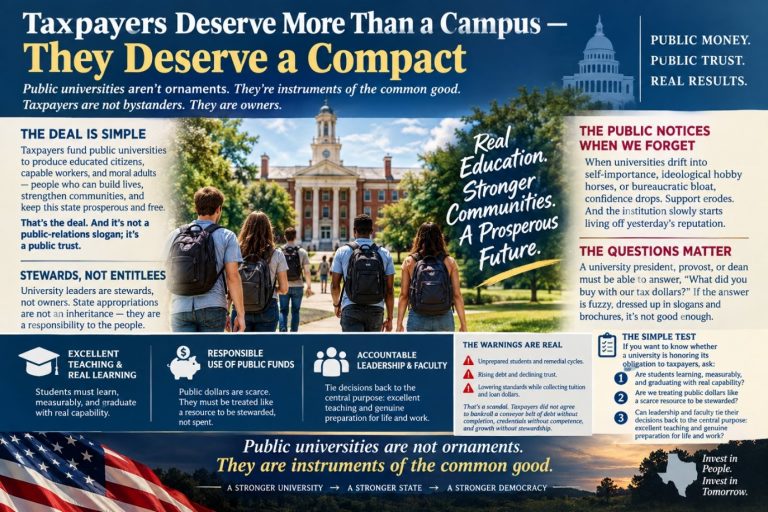
A 21st-century Tappan perspective is in order. Universities exist for the public good, welding together intellectual vibrancy and social progress. A university must help create an informed citizenry, a vibrant economy and a moral culture capable of self-governance. Ideas generate economic vitality. Research fuels innovation. Teaching cultivates responsibility. Education cannot be accomplished by legislation, construction, proclamation, promotion or applause; any of these in isolation adds little. Learning is realized in classrooms, laboratories, libraries and studios where disciplined scholars pursue truth with courage and invite students into that pursuit. Provide faculty and students protection and tools, then demand excellence and integrity.
All of this requires nearly nonexistent campus leadership fueled by courage and increasingly rare missionary zeal. Then Tappen’s idea of a university will flourish. The shadow a university casts on society depends on the strength of the tree.
Walter V. Wendler is the President of West Texas A&M University. His weekly columns, with hyperlinks, are available at https://walterwendler.com/.